
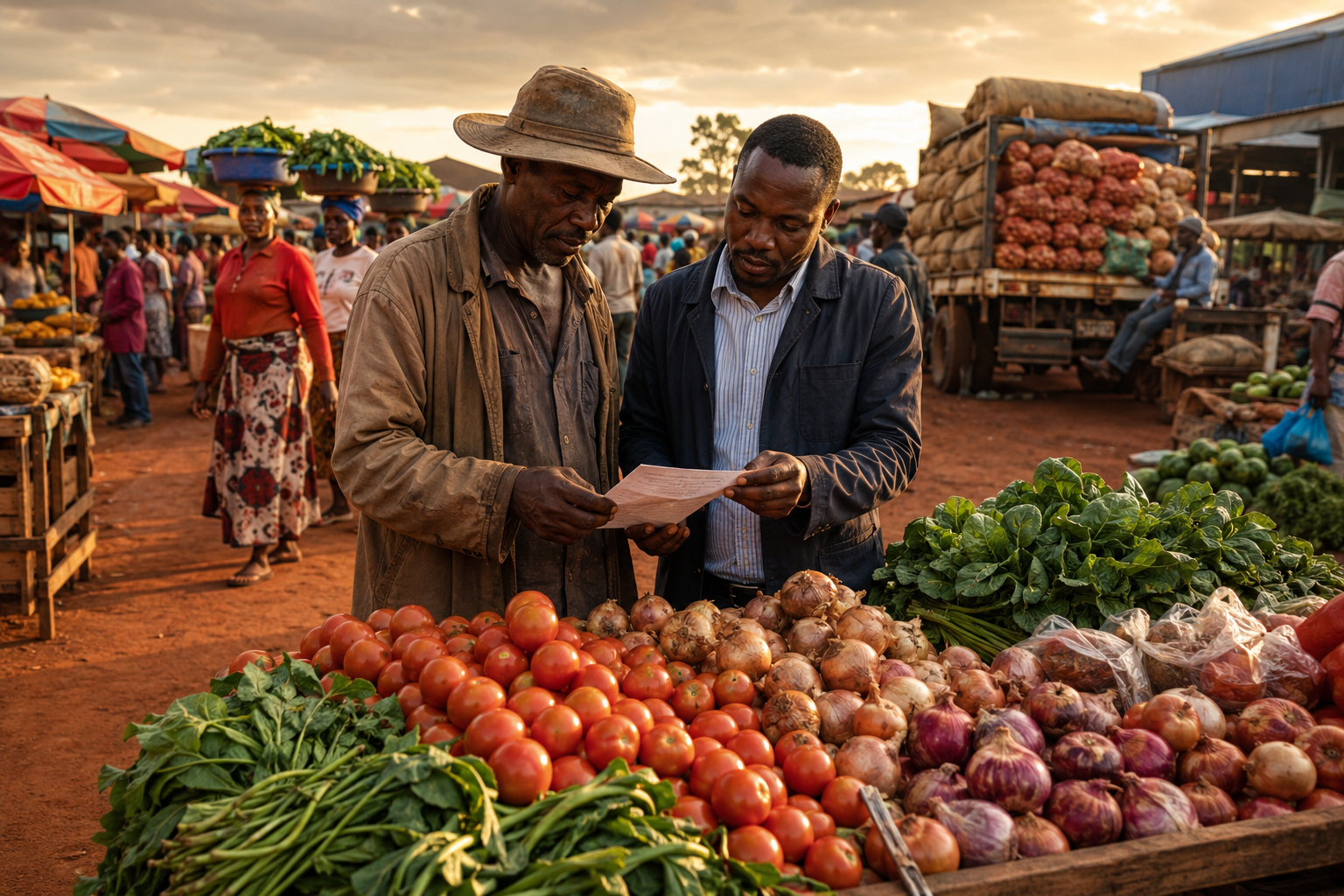
“Middlemen will swindle you out of your money.” It’s a phrase that echoes across Zimbabwe’s farming communities — and while it holds some truth, it doesn’t tell the whole story.
Zimbabwe’s agricultural economy runs largely on informal rails. Produce moves through open-air markets, roadside traders, and a sprawling network of intermediaries connecting producers with consumers. This is the actual infrastructure of Zimbabwean food trade — and middlemen are its connective tissue.
Why Farmers Distrust Middlemen
Distrust stems from real experiences: price gaps that feel like exploitation, a lack of transparency around deductions, and stories of delayed payments or disappearing buyers. These frustrations are valid. But they can blind farmers to the genuine value middlemen provide in a market where formal infrastructure is limited and relationships substitute for contracts.
The Value Middlemen Add
Experienced middlemen offer what most smallholder farmers cannot replicate alone: real-time knowledge of price fluctuations across markets from Mbare Musika to Bulawayo’s Renkini and cross-border buyers in Zambia and South Africa. They forecast supply shifts, move perishable goods quickly, and open regional markets that individual farmers could never access on their own.
I learned this firsthand. I once held back a good onion harvest, convinced I could wait for a better price. A middleman had warned me that a major commercial harvest was coming the following week. I didn’t listen. Prices dropped sharply, and I sold at nearly half the original offer — with added losses from storage and spoilage. The information that buyer carried was worth more than the margin I was holding out for.
The Coordination Problem
One of the biggest threats to a farmer’s income isn’t a dishonest middleman — it’s a neighbour who planted the same crop. When hundreds of smallholders independently respond to the same price signals, the resulting glut sends prices into freefall. Markets flood, buyers drop their offers, and farmers sell at a loss. The following season, supply contracts and prices spike — and the boom-bust cycle repeats.
This is a coordination failure, not an inevitability. Farmer cooperatives that deliberately diversify what members plant and when can deliver a steady, manageable supply to the market — protecting prices for everyone.
Smarter Ways to Work with Middlemen
Rather than avoiding middlemen, farmers can engage more strategically:
- Vet before trusting — Start with small deals and build trust gradually before committing large volumes.
- Use simple contracts — Even a basic written agreement covering price, volume, and payment terms protects both parties.
- Join farmer groups — Collective selling improves negotiating power and enables coordinated planting decisions.
- Share market information — If a middleman tells you something useful, pass it on. A better-informed farming community makes better collective decisions.
- Think beyond the season — Before you plant, consider what your neighbours are likely to grow. Staggering harvests or choosing different crops can protect your prices.
Reframing the Narrative
Zimbabwe’s informal agricultural market is not a temporary inconvenience — it is the system. Within it, middlemen are not always villains. Many are experienced professionals navigating real complexity on behalf of producers and buyers alike.
The goal isn’t to eliminate middlemen, but to build a more informed and honest relationship with them. Farmers who understand the market, coordinate their planting, and engage with intermediaries from a position of knowledge are far less likely to be exploited — and far more likely to profit.
With the right partnerships and a more collective approach to what we grow and when, middlemen can be more than a necessary evil. They can be a genuine asset to Zimbabwean agriculture.