
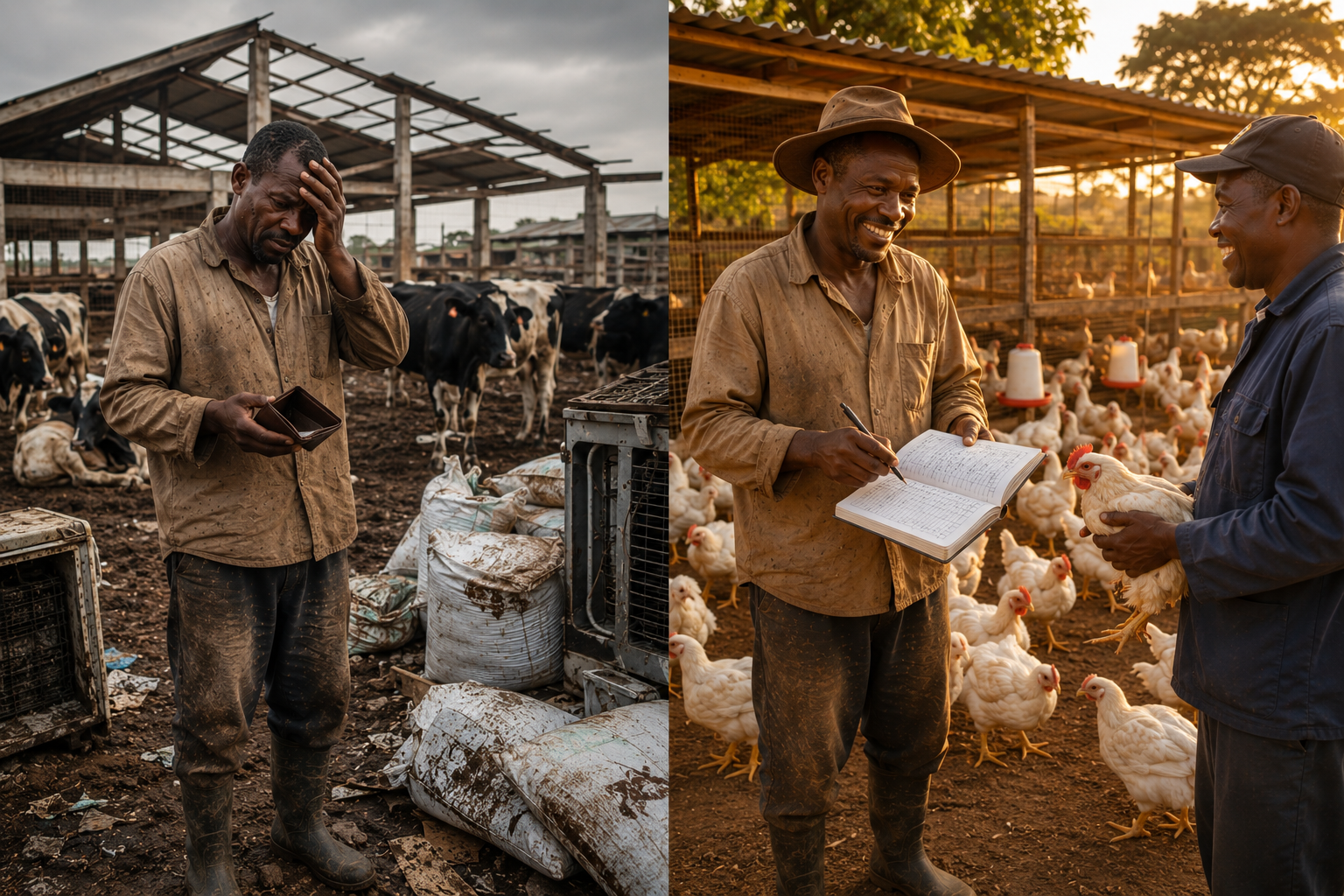
Why starting big in agriculture is often the fastest route to losing everything
Imagine you have US$10,000 and you’re standing at a crossroads.
You could open a small retail shop — buy modest stock, start selling, learn the business, and reinvest as you grow. Or you could lease a large commercial space, fill it with inventory, hire staff from day one, and operate at full scale immediately.
Both are the same business. But one matches where you are. The other matches where you want to be — and that difference can cost you everything.
This is the trap many people fall into when they enter agriculture. It’s rarely about choosing the wrong enterprise. Most are already farming — growing tomatoes, onions, leafy vegetables, or raising broilers. The problem is choosing the wrong scale to start at.
The Scale Trap
Agriculture in Zimbabwe is full of people who already understand the basics. Horticulture is widely practiced. Broiler production is familiar. The knowledge exists. What doesn’t always exist is the financial foundation to support the scale at which people want to operate.
The temptation is understandable. A neighbour runs 500 broilers and appears to be doing well. A fellow farmer cultivates two hectares of tomatoes and drives a new truck. So the instinct is to start there — or bigger. But what isn’t visible is the cash reserve that neighbour used to cover feed costs when birds got sick, or the established buyer relationships that absorbed two hectares of produce at peak harvest.
Starting at a scale you cannot sustain doesn’t reflect ambition. It reflects a mismatch between vision and current capacity — and it is one of the most common reasons agricultural projects fail in their first or second season.
Scale Determines Everything
Scale is not just about how much land you plant or how many animals you stock. It determines your cash flow demands, your input costs, your infrastructure requirements, your market access needs, and your margin for error.
A small broiler run of 100–200 birds is manageable with basic housing, modest feed capital, and a local market. Jumping to 1,000 birds immediately means purpose-built infrastructure, a consistent and significant feed budget, reliable veterinary support, and buyers who can absorb volume — all before a single bird is sold. The enterprise is the same. The scale changes everything.
The same is true in horticulture. Growing half a hectare of tomatoes allows you to learn the market, test your timing, manage post-harvest losses, and build buyer relationships. Planting two hectares from the start means you need transport, labour, storage, and a guaranteed market — or you will be selling at panic prices when everything ripens at once.
Start Where You Can Execute, Not Where You Want to Arrive
The most successful farmers are rarely those who started biggest. They are those who started at a scale they could fully control, learned what that scale demanded, and expanded deliberately — using profit and experience as their guide, not just ambition.
A useful reframe: instead of asking “How big can I go?”, ask “What scale can I run efficiently with what I have right now?” Because clean execution at a small scale will always outperform a large operation held together by hope and borrowed time.
Starting with 200 broilers, managing them well, and reinvesting into 500 is a growth story. Starting with 1,000 birds you cannot properly feed or house, and losing the flock to disease or cash shortage, is not a scale-up — it’s a setback that can take years to recover from.
Conclusion
Ambition is not the problem. In fact, ambition is exactly what agriculture needs. The problem is when ambition skips the steps that make scale sustainable.
Start at the scale your current resources can fully support. Master it. Then grow. That is not a limitation — it is the most reliable path to eventually operating at the scale you originally envisioned.
In agriculture, size is earned. And it is earned one well-managed season at a time.